
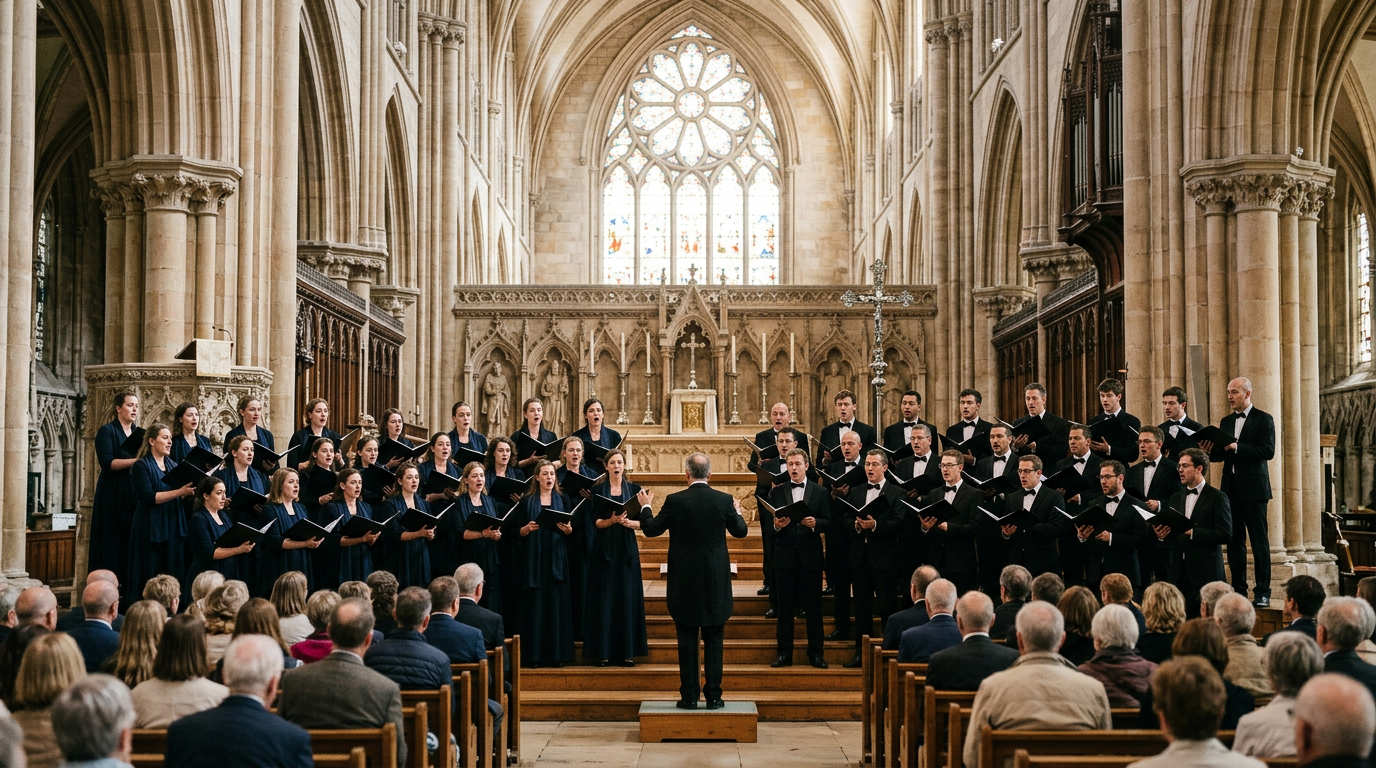
Choral traditions vary widely, yet they share one strength: they turn listening into a collective experience. Even first-time audiences can feel how room acoustics and group singing shape emotion.
Shape-note gatherings in North America invite people to sit in a square and sing from notation systems designed for community participation. Precision matters less than shared energy and continuity.
In parts of Wales, choir culture still functions as civic infrastructure. Rehearsals build routine and belonging, while concerts anchor local calendars across generations.
Across Europe, sacred festivals present repertoire in churches and cathedrals built for resonant vocal sound. The architecture becomes an active part of the performance experience.
Many modern choirs also experiment with contemporary arrangements, film music, and multilingual programming. This keeps traditions accessible to audiences who may not know older liturgical works.
For visitors, context helps. Reading short program notes before a concert can deepen appreciation of language, historical background, and compositional choices.
Choral weekends are easier to enjoy with realistic pacing. Two focused events and a long break often create a better experience than trying to attend every available performance.
Local food and social spaces matter as much as venues. Informal conversations between sessions often reveal how choirs sustain volunteers, train new singers, and fund programming.
If you are new to choral music, choose performances with clear sightlines and shorter sets. Familiarity builds quickly when text and musical structure are easy to follow.
These traditions endure because they combine skill and hospitality. They welcome listeners while preserving disciplined rehearsal cultures that maintain musical quality.
Plan one weekend around a local festival or choir showcase, and leave room for rest between sessions. Choral listening rewards attention, and attention needs time.