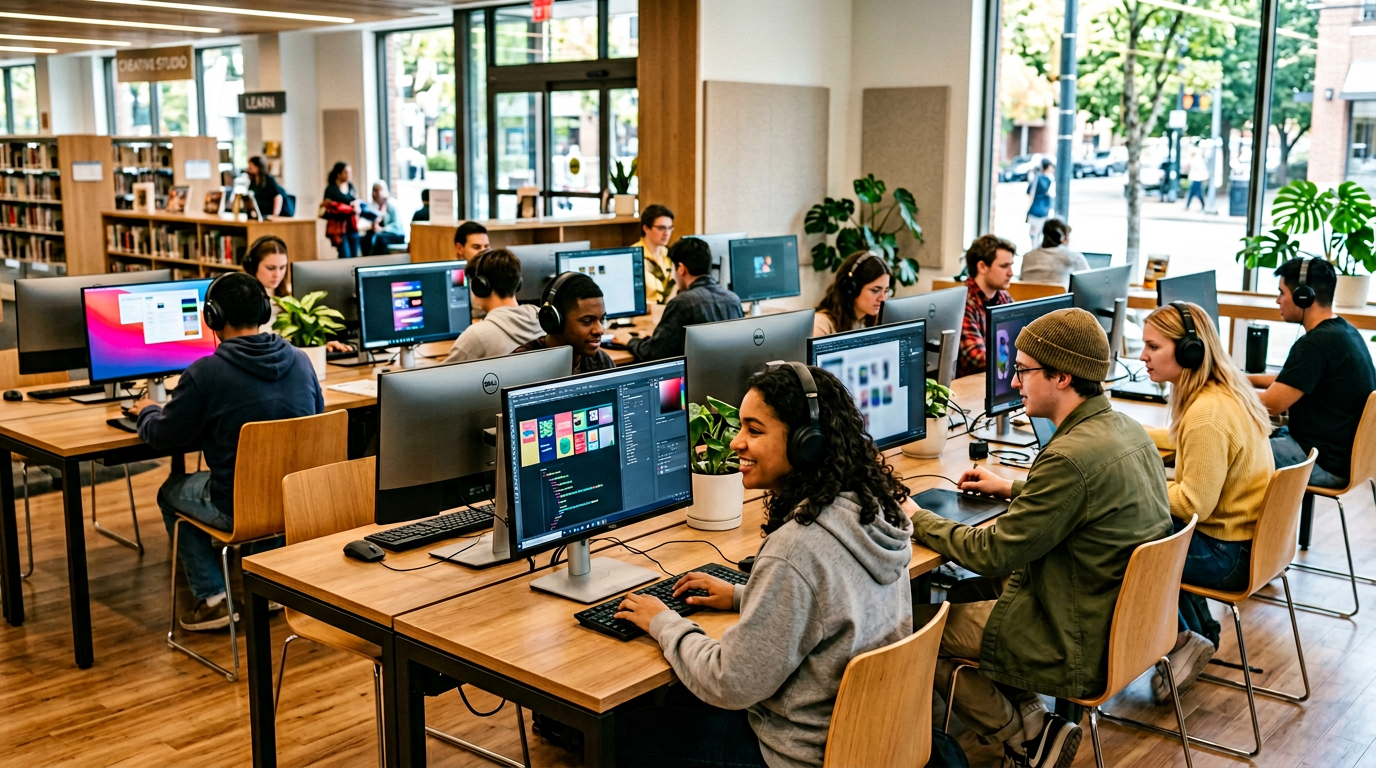
Public libraries are changing from silent storage spaces into active learning hubs. Many branches now host creative studios where students can record audio, edit video, and experiment with design tools.
The shift responds to a simple gap: schools often have limited time and equipment, while households have unequal access to laptops, printers, and quiet work areas. Libraries can bridge that gap with shared resources.
In many cities, the first step is modest. A branch might begin with a small room, a few microphones, and a booking calendar that gives local teens predictable access after school.
Staff training is central to success. Librarians do not need to be full-time engineers, but they do need clear guides, troubleshooting workflows, and enough confidence to help first-time users.
Programs work best when they are practical. Poster design for a school club, recording a podcast assignment, or digitizing family photos often attracts more engagement than abstract lessons.
Parents value these spaces because they combine supervision with purpose. Instead of waiting in crowded transit hubs, students can finish projects in an environment that is structured and welcoming.
Libraries also support local artists by hosting short workshops. A weekend session on basic audio editing or zine layout can make creative tools feel approachable for both teenagers and adults.
Funding models vary, but partnerships are common. Municipal grants, local foundations, and donated devices from universities or businesses often provide the initial push for equipment and maintenance.
Accessibility matters as much as technology. Branches that offer multilingual instructions, adjustable workstations, and beginner-friendly booking systems tend to keep participation broad and consistent.
For users, the value is immediate: fewer barriers to completing creative work, lower pressure to buy expensive software, and a stronger sense that culture is something people can make, not only consume.
As libraries expand these studios thoughtfully, they preserve their original mission while updating it for current needs: equal access to knowledge, now in audio tracks, short films, posters, and digital portfolios.