
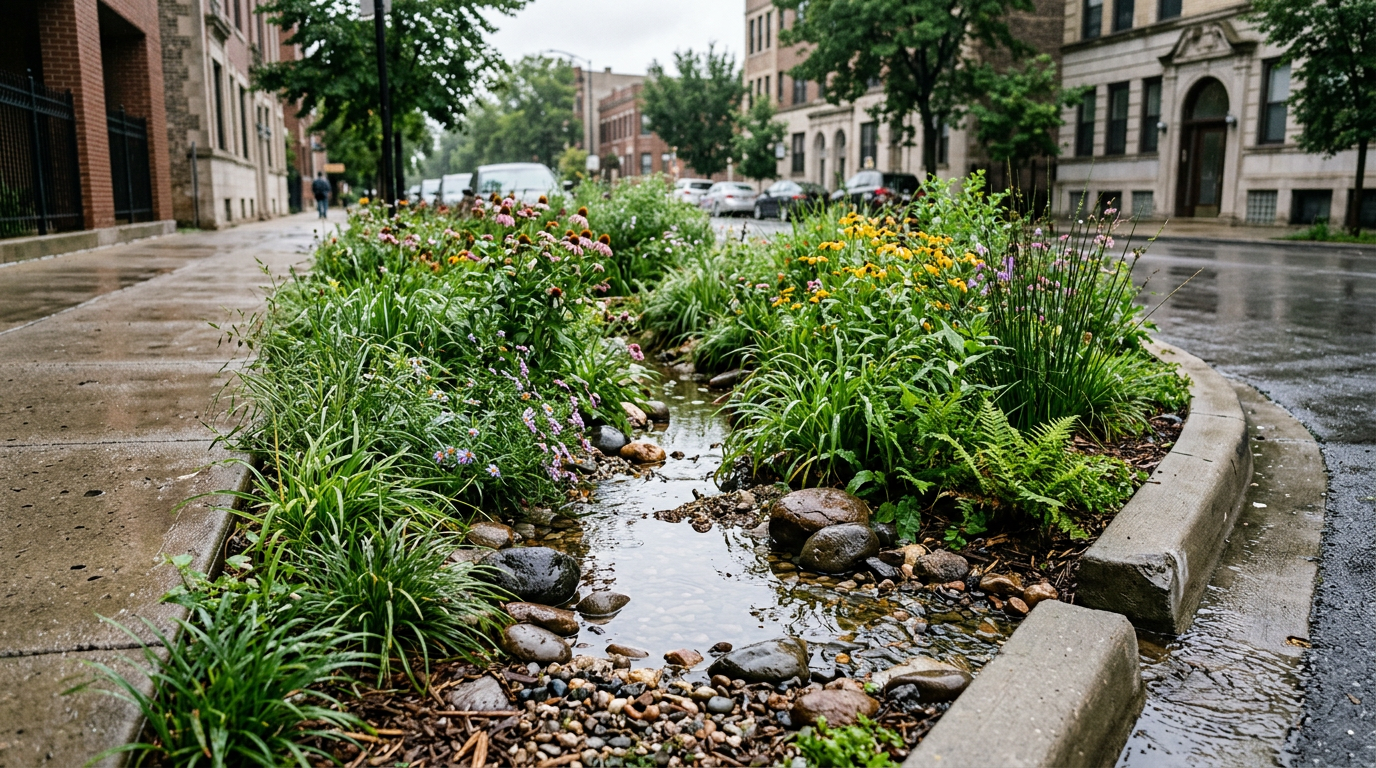
During heavy rain, city drains can fill quickly and water pools where streets dip. Rain gardens are one practical way to slow runoff before it overwhelms pipes.
A rain garden is a shallow planted area designed to capture and absorb water from roofs, sidewalks, or roads. Instead of rushing directly into drains, water filters gradually through soil.
These systems are small enough for schoolyards, apartment courtyards, and roadside corners. Their size makes them easier to add in dense neighborhoods where major infrastructure projects are difficult.
Engineers select soil mixes that drain well while supporting plants. Native grasses and deep-rooted perennials are common because they tolerate both wet and dry periods through changing seasons.
Location is critical. A rain garden works best where it can intercept flow naturally, with enough distance from building foundations and with overflow routes for extreme storms.
Maintenance is straightforward but essential: seasonal weeding, mulch checks, and clearing blocked inlets. When maintenance is planned in advance, performance stays high and costs remain low.
Beyond flood control, rain gardens can cool local microclimates and support pollinators. Even small patches of diverse planting help connect fragmented urban habitats.
Residents often appreciate the visual upgrade as much as the drainage benefits. A planted curbside basin is typically more welcoming than bare concrete while still serving an important utility function.
For local governments, rain gardens are useful in a larger toolkit that includes permeable pavements and tree planting. No single intervention solves every stormwater problem, but combined systems are resilient.
Community groups can support projects by identifying flood-prone corners and partnering with city departments on design priorities. Local knowledge helps planners choose locations that matter most.
Rain gardens are a reminder that climate adaptation does not always require massive construction. Sometimes a carefully designed patch of soil and plants can protect streets, improve public space, and make neighborhoods safer during storms.