
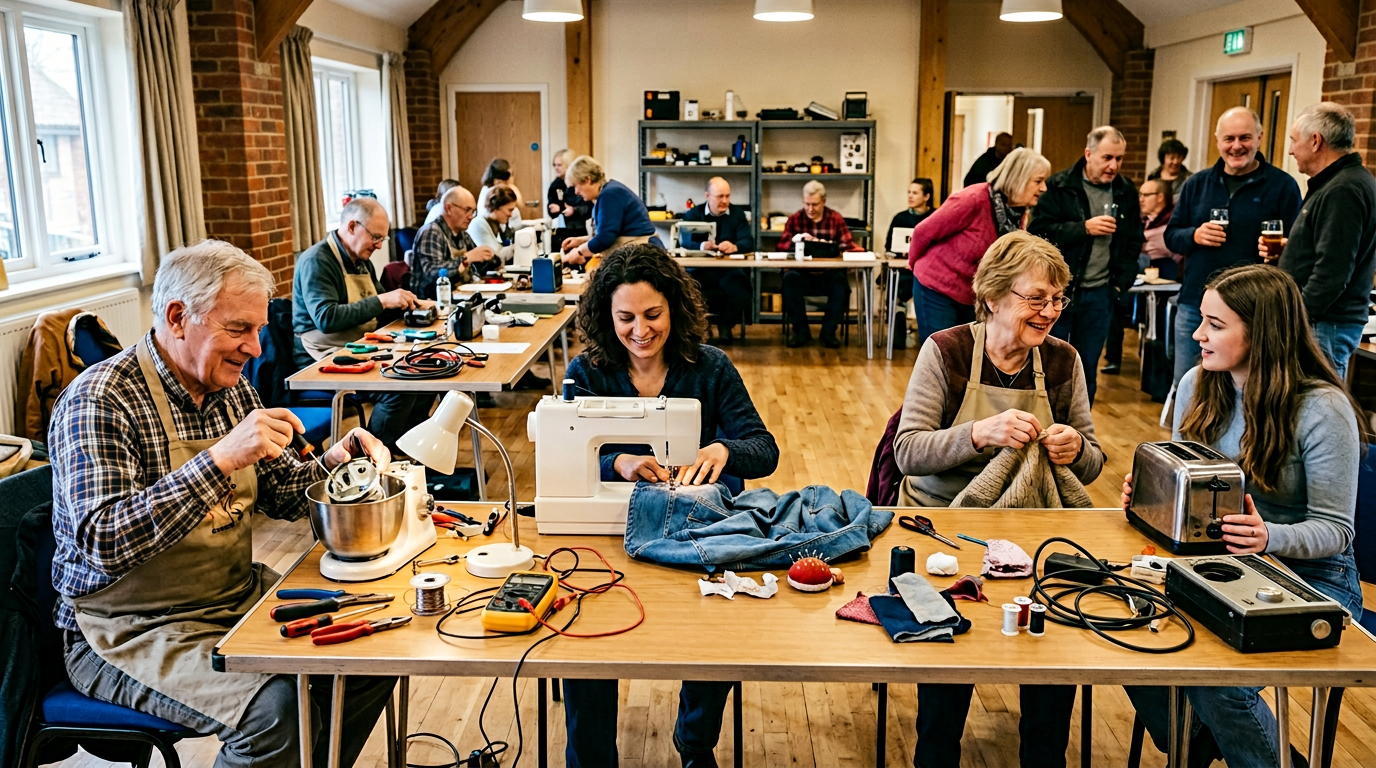
Repair cafes are community events where volunteers help people fix everyday items instead of discarding them. Common repairs include clothing, small furniture, lamps, and household appliances.
They are not commercial workshops. The emphasis is on shared learning, practical guidance, and extending product life through basic repair skills.
A typical session uses themed tables for textiles, electronics, and general tools. This structure helps volunteers focus and keeps wait times manageable.
Successful events measure impact in two ways: waste avoided and skills transferred. A visitor who learns one repair technique can apply it repeatedly later.
Organizing requires planning beyond enthusiasm. Tool upkeep, liability coverage, and safety protocols are essential for sustainable and trustworthy operations.
Clear boundaries are important, especially for electrical items. Mature groups define what they can safely attempt and when an item should be referred to professional service.
Repair cafes also create social value. They bring together different age groups, encourage conversation, and strengthen neighborhood cooperation around practical problems.
For participants, the benefit is often confidence as much as cost savings. Understanding how products are assembled reduces dependence on replacement culture.
Not every item can be fixed, and that is still useful information. Failed repairs can reveal design weaknesses and guide better purchasing choices in the future.
Local governments and libraries increasingly support these events with venue space and promotion, recognizing their role in circular economy goals.
At their best, repair cafes combine environmental benefit with hands-on education. They make sustainability tangible by turning "throw away" decisions into opportunities to learn and reuse.