
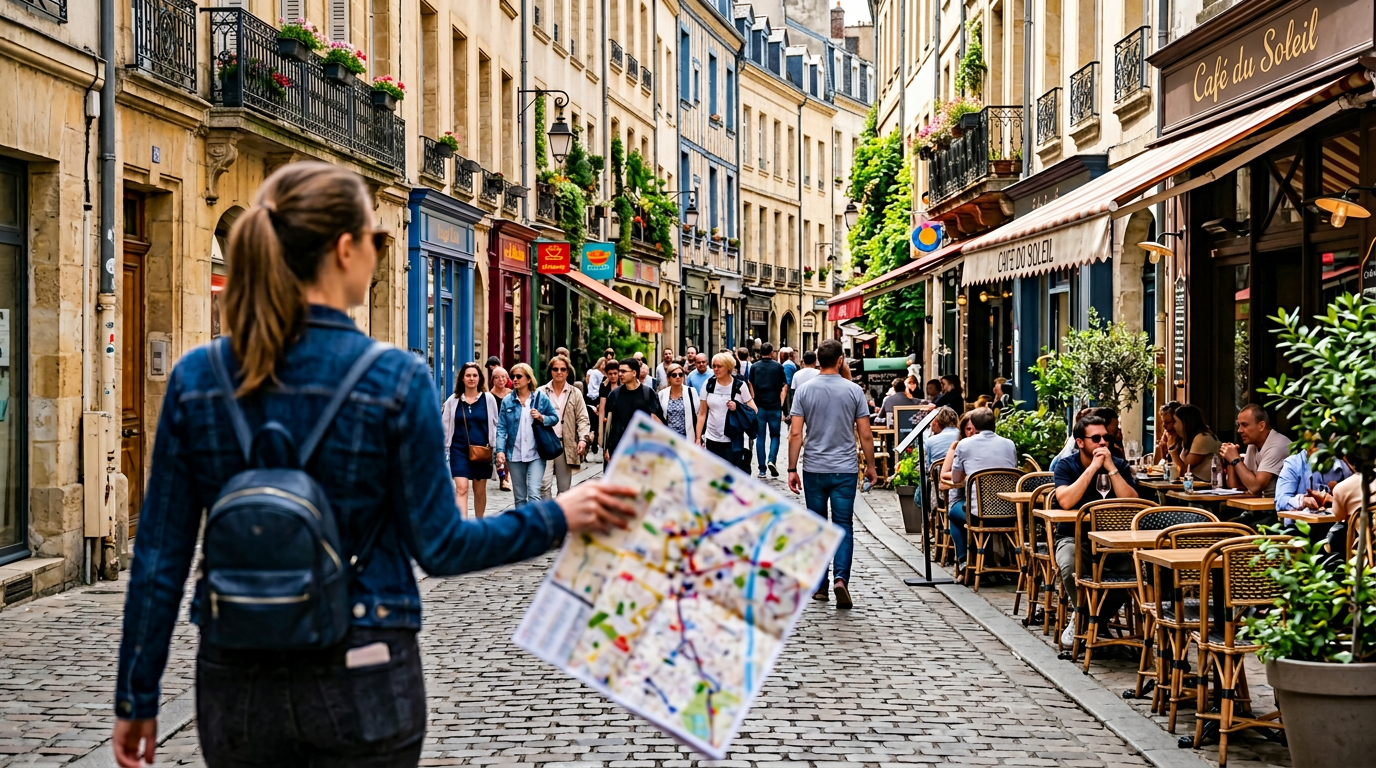
Many city itineraries are built around famous spots, but locals usually plan days by rhythm. A good walking route balances interest, shade, seating, and realistic transitions between neighborhoods.
Start by choosing one anchor point for the morning and one for the late afternoon. Everything else should support that arc instead of competing with it.
Limit your walking radius on a map before adding attractions. Distances that look short online can feel long once crowds, traffic lights, and photo stops are included.
Plan your first break early, not when people are already tired. A twenty-minute coffee stop after the first stretch helps the group settle into the pace of the day.
Mix busy streets with quieter segments. Constantly crowded areas can be exciting for an hour, but side streets, small courtyards, and local parks create room to breathe.
Use food stops to discover neighborhoods, not just to refuel. A bakery, market stall, or simple lunch counter can reveal local routines better than large tourist venues.
Include one flexible segment where participants can choose between options. For example, some may prefer a museum while others browse bookshops nearby, then regroup at a clear meeting point.
Check practical details in advance: public toilets, water refill points, and public transit links in case weather changes. Comfort planning often decides whether a route feels enjoyable or exhausting.
For photography, choose two or three viewpoints with different light conditions rather than chasing dozens of landmarks. Fewer stops usually produce better memories and less rushing.
End in an area with easy transport and dinner choices. A smooth finish matters because it lets people leave with energy, not with a long complicated transfer.
The best one-day city walks feel intentional but not rigid. When the route is built around pace and local texture, visitors see more, spend less time queueing, and enjoy the city as a place, not a checklist.