
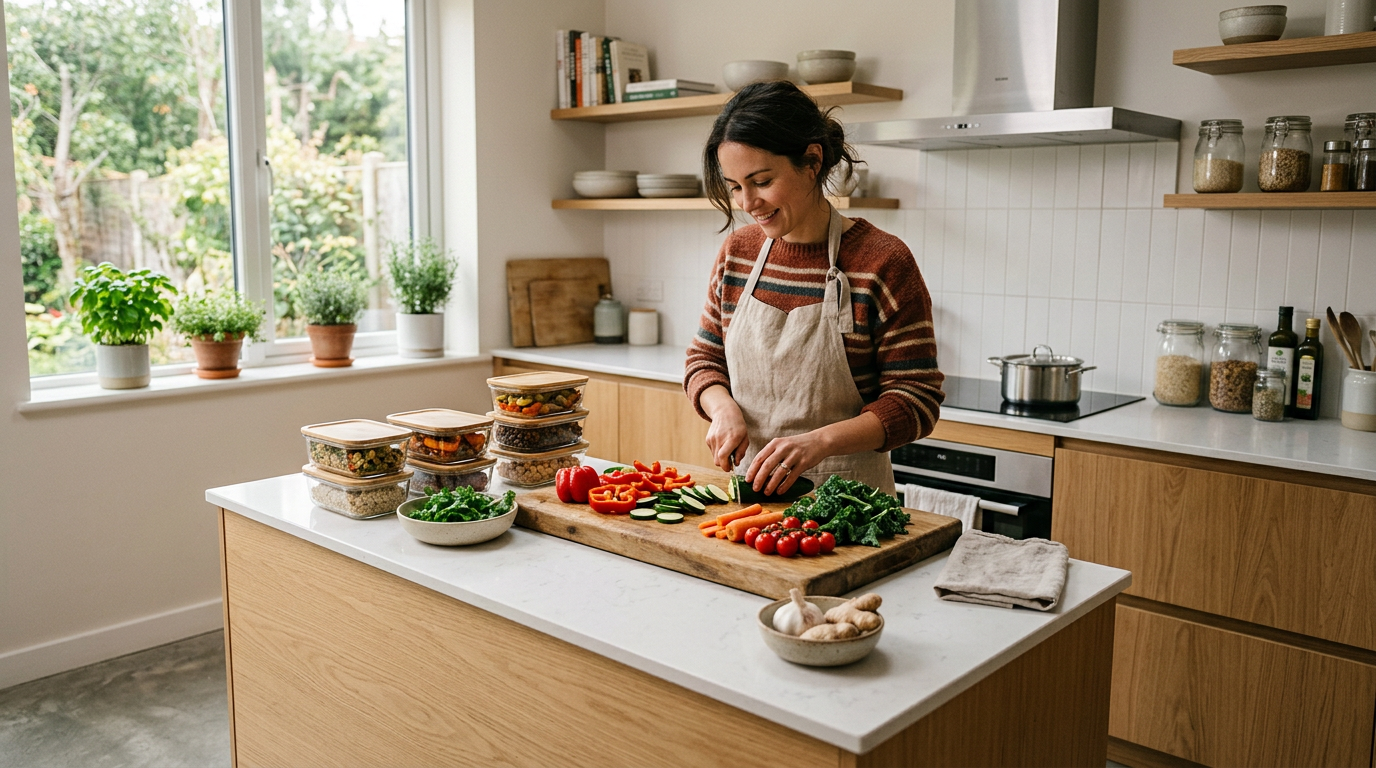
Weekday meals become stressful when every dinner starts from zero. Calm cooking is usually the result of a few repeatable prep habits rather than complex recipes.
Lower the starting barrier by prepping basics in advance. Washed greens, pre-cut vegetables, and portioned grains make evening decisions faster and easier.
Keep one reliable flavor base available, such as a sauce, spice mix, or broth. Familiar seasoning helps simple ingredients feel intentional without extra effort.
Sheet-pan and one-pot meals are practical, not lazy. Fewer pans reduce cleanup time, which often determines whether home cooking feels sustainable.
Create a short rotation of five dependable meals. Repetition reduces decision fatigue and ensures you can cook even when energy is low.
Use leftovers strategically. Cooking extra portions for lunch or a second dinner can cut weekday workload in half with minimal extra planning.
Keep emergency ingredients on hand: eggs, frozen vegetables, canned beans, and whole grains. These staples prevent last-minute stress when fresh plans fail.
Set a gentle kitchen closing routine. Quick counter cleanup and next-day prep, even for five minutes, can make tomorrow's cooking feel lighter.
Nutrition improves with consistency, not complexity. Balanced simple meals repeated regularly are usually more helpful than occasional ambitious dishes.
Takeout can still be part of a healthy routine. Flexibility keeps habits realistic and prevents all-or-nothing thinking around food.
The goal is calm, not perfection. Small kitchen systems that reduce friction help weekday meals feel manageable, nourishing, and sustainable over time.